12th Tahara Tobei 1925 (Taisho 14) - 1991 (Heisei 3)
The 12th Tahara Tobei was born in Nagato City, Yamaguchi Prefecture as the second son of the 10th Tahara Tobei.
His real name is Genjiro.
In 1944, while attending Yamaguchi High School, he was drafted and sent to Manchuria.
In 1945, after the end of the war, he was interned in Siberia.
In 1948, he was demobilized from Siberia where he had been detained.
As his eldest brother, the 11th Tahara Tobei, had no successor, he took up the pottery business to carry on the family business.
In 1956, he succeeded to the name of the 12th Tahara Tobei.
In 1972, he became a full member of the Japan Kogei Council.
In 1981, it was designated as an intangible cultural property by Yamaguchi Prefecture.
Hagi ware tea bowls are made from clay that is not fired tightly, giving them a unique soft texture. Because the clay is coarse, the difference in shrinkage between the clay and the glaze creates tiny crazing holes that allow moisture to penetrate from the inside to the surface of the bowl, giving it a charm known as the "Seven Changes of Hagi," in which the appearance changes the more the bowl is used.


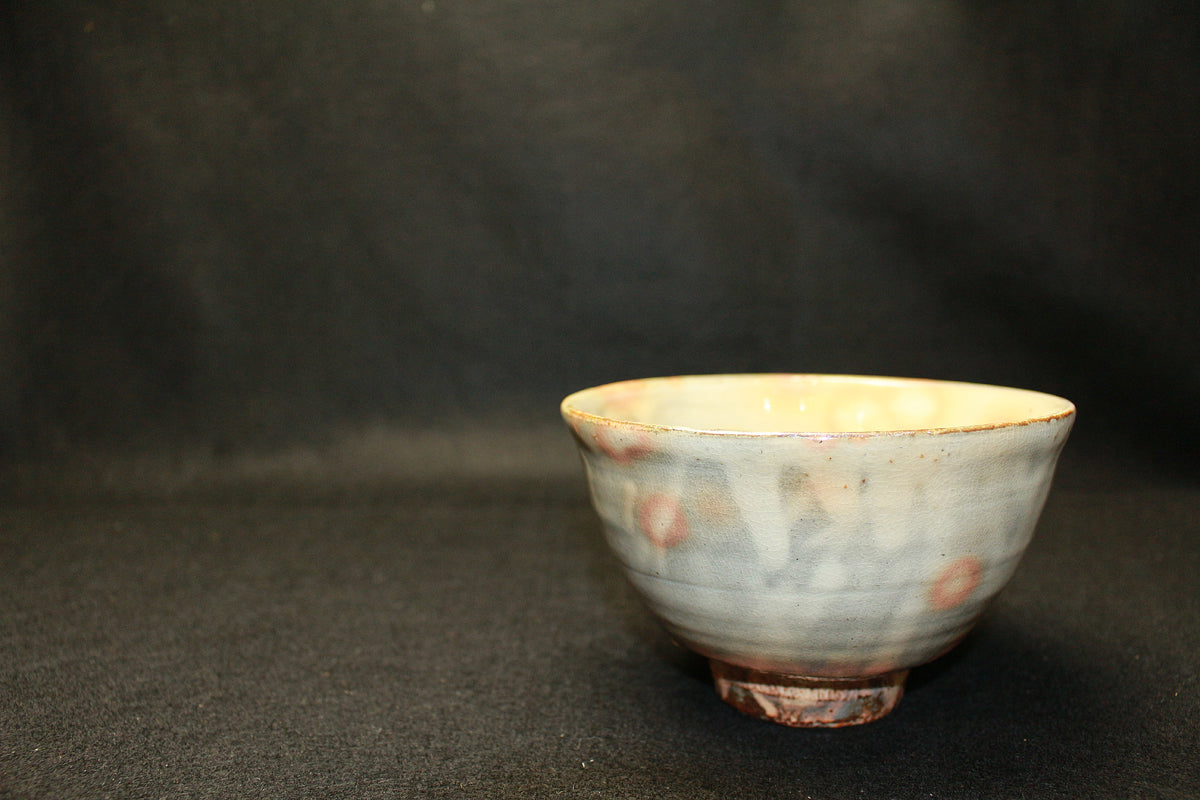


Diameter 13.5cm
12th Tahara Tobei 1925 (Taisho 14) - 1991 (Heisei 3)
The 12th Tahara Tobei was born in Nagato City, Yamaguchi Prefecture as the second son of the 10th Tahara Tobei.
His real name is Genjiro.
In 1944, while attending Yamaguchi High School, he was drafted and sent to Manchuria.
In 1945, after the end of the war, he was interned in Siberia.
In 1948, he was demobilized from Siberia where he had been detained.
As his eldest brother, the 11th Tahara Tobei, had no successor, he took up the pottery business to carry on the family business.
In 1956, he succeeded to the name of the 12th Tahara Tobei.
In 1972, he became a full member of the Japan Kogei Council.
In 1981, it was designated as an intangible cultural property by Yamaguchi Prefecture.
Hagi ware tea bowls are made from clay that is not fired tightly, giving them a unique soft texture. Because the clay is coarse, the difference in shrinkage between the clay and the glaze creates tiny crazing holes that allow moisture to penetrate from the inside to the surface of the bowl, giving it a charm known as the "Seven Changes of Hagi," in which the appearance changes the more the bowl is used.