


Product number: SKU:26417
26417 Living National Treasure Kyusetsu Miwa X Hagi Teabowl
26417 Living National Treasure Kyusetsu Miwa X Hagi Teabowl
Sold out


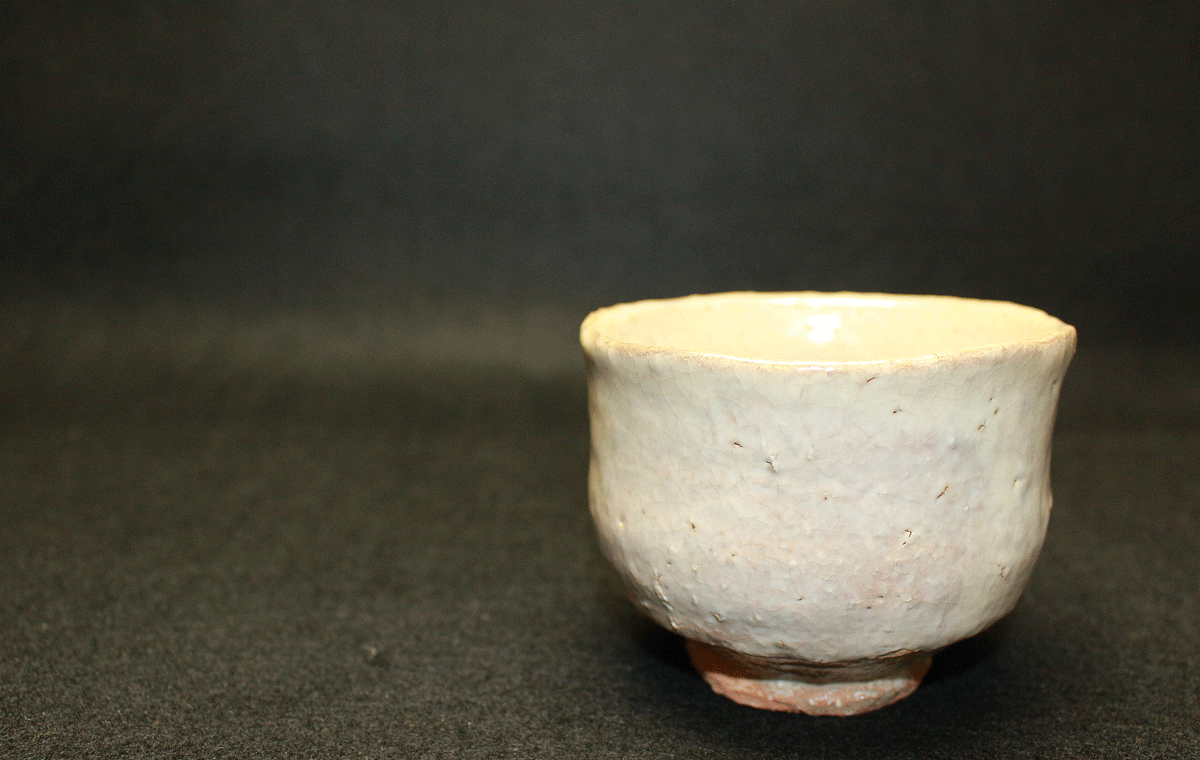

Product number: SKU:26417


Diameter: 9.2 cm
Born as the second son of Miwa Setsudo, the 9th head of the Miwa Kiln, which had inherited Hagi ware for generations as an official kiln of the Hagi Domain since the early Edo period, he began his career as a potter. In 1927, when Setsudo retired, he succeeded him as the 10th head of the Miwa Kiln and took the name Miwa Kyusetsu X. He formed the "Karahine-kai" with Hanko Kawakita, Toyo Kaneshige, and Toyozo Arakawa, developing Hagi ware through his own dedicated study. In his later years, he ceded the title of Miwa Kyusetsu XI to his younger brother (later Miwa Jusetsu, a Living National Treasure), adopting the name Miwa Kyuwa. Ultimately, he was designated a Living National Treasure for Hagi ware, leaving a significant legacy in the history of modern Japanese ceramics.